
Leading with Hope: Guiding Higher Education Forward from a Registry Interim
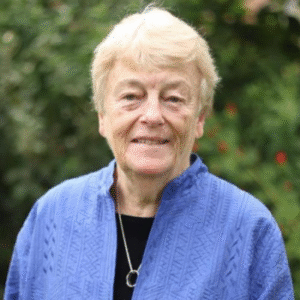
Dr. Carol Moore
Registry Member
Hope
You were chosen as the Interim Provost because of your credentials, experience, and that all-important concept of “fit.” Based on your background, you have witnessed the challenges higher education has faced over the past several decades — for example, the stock market decline in the 1980s and the ongoing decline in the 18-year-old population since then. Now, higher education is under siege once again. While your many skills and vast knowledge will serve the institution well during this period of instability, you can also bring one more invaluable quality that isn’t listed on your CV: hope — defined by Webster’s Dictionary as “the ability to see the light after a patch of dark.”
Yes, hope — that higher education will once again prove resilient. But instead of returning to what once was, let us bounce forward with new knowledge, ingenuity, and wisdom. Eleanor Roosevelt said, “The future belongs to those who believe in the beauty of their dreams.” Many of us in higher education are tired, even downtrodden, as one challenge after another has tested our resilience and sense of worth. Let us hold on to hope — not to bring back the “good old days,” but to build new paths toward persistence and graduation.
How to bring hope:
Address faculty, students, and staff. If there is a strategic plan, focus on building new paths for retention and graduation. If there isn’t one, establish a task force to engage everyone in setting the next set of goals. Ensure that the charge is forward-looking, always framed in future-oriented terms, and centered on making education and campus life better for students. Reengage faculty in scholarship.
What hope can do:
Hope can move the institution forward. It can shift faculty and staff toward a more positive perspective. Students will become more focused on their academics and more engaged in their experiences. Overall, there will be less contention on campus. With all your experience, you undoubtedly know many other ways to promote hope for the future — perhaps even positioning the college ahead of the curve.
Research shows that people are more positive and creative when they can see light at the end of a dark tunnel. The central focus should be on creating an engaging learning environment for all students. Nelson Mandela said, “It always seems impossible until it is done.”
Best wishes for success,
Carol A. Moore, Ph.D.
Former President, Lyndon State College; Burlington College; Guilford College; and Columbia College
Leading with Hope: Guiding Higher Education Forward from a Registry Interim
Dr. Carol Moore
Registry Member
Hope
You were chosen as the Interim Provost because of your credentials, experience, and that all-important concept of “fit.” Based on your background, you have witnessed the challenges higher education has faced over the past several decades — for example, the stock market decline in the 1980s and the ongoing decline in the 18-year-old population since then. Now, higher education is under siege once again. While your many skills and vast knowledge will serve the institution well during this period of instability, you can also bring one more invaluable quality that isn’t listed on your CV: hope — defined by Webster’s Dictionary as “the ability to see the light after a patch of dark.”
Yes, hope — that higher education will once again prove resilient. But instead of returning to what once was, let us bounce forward with new knowledge, ingenuity, and wisdom. Eleanor Roosevelt said, “The future belongs to those who believe in the beauty of their dreams.” Many of us in higher education are tired, even downtrodden, as one challenge after another has tested our resilience and sense of worth. Let us hold on to hope — not to bring back the “good old days,” but to build new paths toward persistence and graduation.
How to bring hope:
Address faculty, students, and staff. If there is a strategic plan, focus on building new paths for retention and graduation. If there isn’t one, establish a task force to engage everyone in setting the next set of goals. Ensure that the charge is forward-looking, always framed in future-oriented terms, and centered on making education and campus life better for students. Reengage faculty in scholarship.
What hope can do:
Hope can move the institution forward. It can shift faculty and staff toward a more positive perspective. Students will become more focused on their academics and more engaged in their experiences. Overall, there will be less contention on campus. With all your experience, you undoubtedly know many other ways to promote hope for the future — perhaps even positioning the college ahead of the curve.
Research shows that people are more positive and creative when they can see light at the end of a dark tunnel. The central focus should be on creating an engaging learning environment for all students. Nelson Mandela said, “It always seems impossible until it is done.”
Best wishes for success,
Carol A. Moore, Ph.D.
Former President, Lyndon State College; Burlington College; Guilford College; and Columbia College
HIRE AN INTERIM
Searching for an Interim?
Please contact us for more information.
